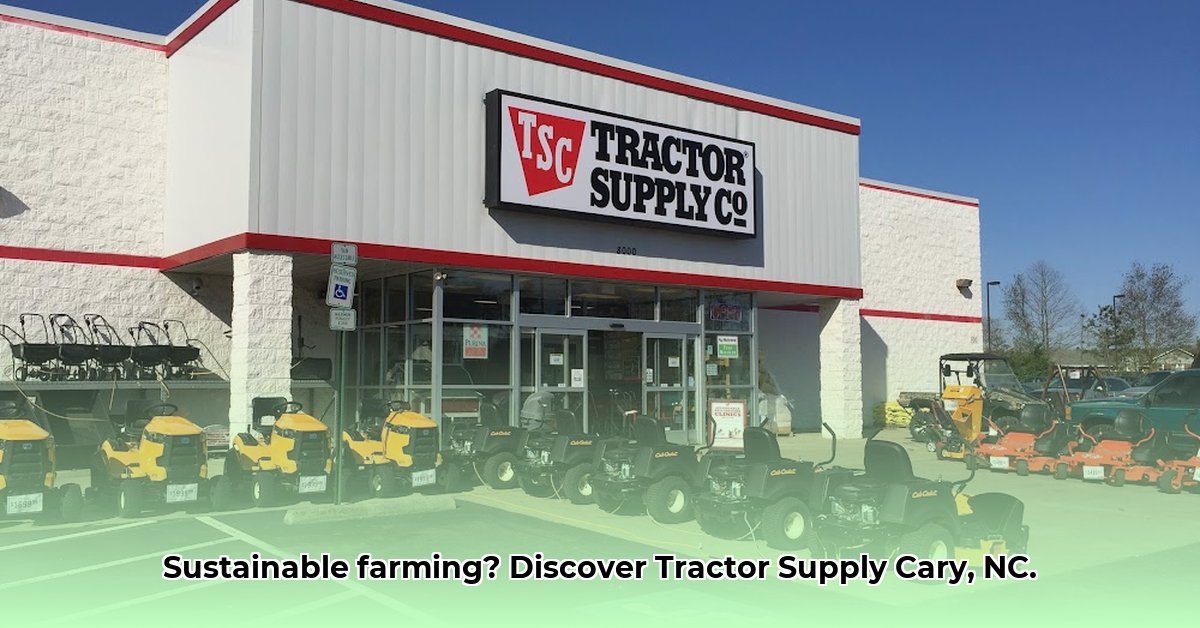
Tractor Supply Cary, NC: A Deep Dive into Sustainable Farming Practices
Cary's vibrant agricultural community relies heavily on resources like Tractor Supply (TSC). This article investigates TSC Cary's contribution to sustainable farming, revealing a critical gap between available products and demonstrable commitment to environmentally responsible practices. While the store offers numerous products supportive of sustainable agriculture, concrete evidence of TSC's overall sustainability efforts remains elusive. For more information on TSC Cary, visit their website.
Sustainable Farming Products at Tractor Supply Cary
Tractor Supply Cary stocks a range of products that could facilitate sustainable farming. These include organic seeds (promoting soil health), compost (reducing reliance on chemical fertilizers), water-efficient irrigation systems (crucial during drought), and tools minimizing soil disruption (reducing erosion). They also carry fencing materials for responsible livestock management. However, the mere presence of these items doesn't equate to a demonstrable commitment to broader sustainability.
The Missing Link: TSC's Sustainability Commitment
This investigation reveals a critical lack of transparency regarding TSC's commitment to sustainable agriculture. While the store sells many products that can be used sustainably, the crucial question remains: what are TSC's own sustainability practices? Are their supply chains truly environmentally responsible? What's their environmental impact beyond the products they sell?
How much energy does the store consume? What's their waste management strategy? Do they actively prioritize water conservation in their operations? These key questions require further research to assess the true extent of TSC's commitment. Are they making meaningful strides, or is their sustainability marketing ahead of their actual practices?
Unpacking the Supply Chain: Transparency is Key
A comprehensive assessment demands a deep dive into TSC's supply chain. For example, are the organic seeds truly certified, employing farming methods that protect biodiversity and minimize environmental harm? What about the origin of their wood products used in fencing? Is the wood sustainably harvested, or does its sourcing potentially contribute to deforestation? Transparency in the entire supply chain—from raw materials to the store shelf—is paramount to determining their genuine contribution to sustainable agriculture.
Environmental Impact: Measuring TSC's Footprint
Beyond the products, a crucial aspect of this investigation is TSC's operational environmental impact. This includes their energy consumption, reliance on renewable energy sources, waste management strategies (including recycling and waste reduction), and water conservation efforts. Quantifiable data on these metrics is essential to objectively evaluate their environmental performance. The absence of this data hinders a comprehensive evaluation of their impact.
Community Engagement: Gathering Local Perspectives
To better understand the ground-level impacts of TSC Cary, we need to engage with local farmers and stakeholders. Their firsthand experiences, insights, and perceptions of TSC's role in sustainable agriculture are invaluable. Direct engagement – through surveys, interviews, and community forums – can offer crucial qualitative data, illuminating the store's influence on local sustainability practices.
Moving Forward: Next Steps in the Investigation
To fully assess TSC Cary's role in sustainable agriculture, a multi-pronged approach is required:
Independent Audits: Third-party audits of TSC's supply chain and operations are needed to objectively assess their environmental impact, labor practices, and commitment to sustainable sourcing.
Data-Driven Analysis: Collecting and analyzing data on TSC's energy consumption, waste generation, and water usage will provide critical metrics to measure their environmental performance.
Community Engagement: Continued interaction with local farmers and the community to gain qualitative insights into their perception of TSC's contribution to sustainability.
Transparent Reporting: TSC should publicly share the findings from these audits and analyses, proactively fostering transparency and accountability.
Only through this rigorous process can we determine the true extent of Tractor Supply Cary's commitment to supporting sustainable farming. The onus is on them to showcase their active participation in creating a more environmentally conscious agricultural sector. Consumers and stakeholders share a responsibility to drive demand for transparency and accountability within the industry.